Steam Heat & Radiator Repair in Ridgewood, Queens
Resolving cold radiators, severe water hammer, spitting vents, and uneven heat distribution in older residential steam and hydronic systems.
Call (315) 202-8009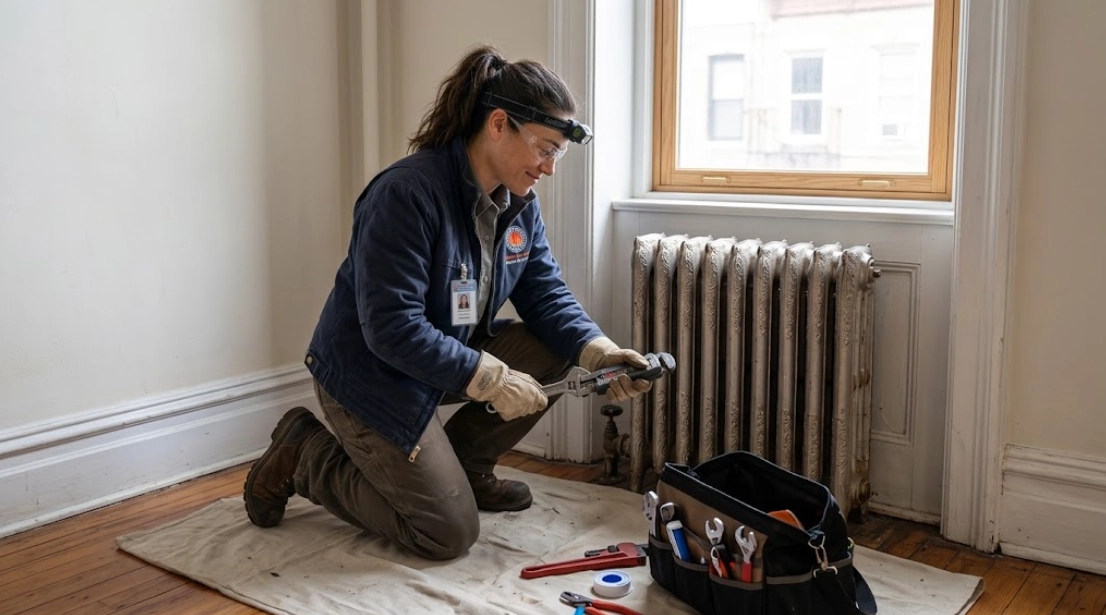
Home > Radiator Repair
Fixing Uneven Heat and Banging Pipes
In many of Ridgewood's older row houses and two-family homes, the steam radiators are original to the building. While cast-iron radiators are incredibly durable, the mechanical components attached to them—specifically the supply valves and the air vents—fail over time. When these components fail, the result is uneven heat distribution: some rooms become sweltering hot while others remain freezing cold, even though the boiler in the basement is running perfectly.
Understanding Steam Distribution
Steam systems require different diagnostic techniques from hot-water hydronic systems. In a one-pipe steam system, steam travels up the same pipe that the condensed water uses to travel back down. For steam to enter the radiator, the cold air inside must be pushed out. This is the job of the air vent. If a radiator is completely cold, the air vent has likely failed in the closed position, trapping the air and blocking the steam. Conversely, if a vent spits water and hisses aggressively, it is stuck open. Replacing these vents with correctly sized units balances the system so the entire building heats evenly.
Water Hammer and Pitch Problems
One of the most disruptive problems in a steam-heated home is "water hammer"—a violent banging noise in the pipes. This occurs when high-velocity steam collides with a pool of trapped condensation. In a radiator, this happens when the radiator pitch is incorrect. Because floors settle over the decades, a radiator that used to tilt slightly toward the supply pipe may now tilt away from it, trapping water. We correct this by properly shiming the radiator to restore the correct pitch, allowing the water to drain freely.
Additionally, leaking radiator supply valves are a frequent source of water damage. Because these valves are exposed to extreme heat and pressure fluctuations, the packing nuts loosen and the seals deteriorate. We repair or replace these heavy-duty valves, preventing steam leaks from rotting the wooden floors beneath them.
Frequently Asked Questions
Why does my radiator hiss constantly?
A brief hiss as the boiler turns on is normal; this is the vent letting cold air out. However, if it hisses continuously and spits water or steam, the internal thermostatic mechanism inside the vent has failed and the vent must be replaced.
Can I just turn the radiator valve halfway to lower the heat?
No. On a one-pipe steam system, the supply valve must be either 100% open or 100% closed. If it is only partially open, steam trying to enter will violently clash with water trying to exit, causing severe banging and potential damage.
Do I need to bleed my steam radiators?
No. "Bleeding" a radiator—manually opening a small valve to release trapped air—is a maintenance task for hot-water hydronic radiators, not steam radiators. Steam radiators use automatic air vents.
For severe leaks resulting from cracked radiators, see our Leak Detection page, or verify our service area in Service Areas.